
Swami Dayanand Saraswati Chair
Objective of the Chair
This Chair has been established by the University Grants Commission for five years and can be extended for two more years. Its main objective is to preach and propagate the lifetime achievements of Swami Dayanand Saraswati, mainly his visionary social reforms through Seminars, Workshops, Summer Schools, and research projects. It also aims to contribute and participate in such activities organized by other Universities, Research Institutes, and Chairs throughout the country.
Swami Dayanand Saraswati: Harbinger of Renaissance
Swami Dayanand Saraswati (1824-1883) was one of the pioneers of the Indian Renaissance and an eminent world figure of the 19th century. He made a great contribution to the upliftment of Indian society. Dayanand welcomed the new scientific and technological advancements of the 19th century. He directed that there must be a national law for compulsory education for all boys and girls, which must be equal in its true sense. The institutions for boys and girls must be separate, and their locations must be far away from each other. There must be mutual love, affection, fraternity, tenderness, sensibility, philanthropy, and equality in society at large. He paved the way for scientific advancement, logical thinking, and financial transparency. Swami Dayanand truly formed a solid ground for the independence of the country.
Aim of Dayanand: All Round Development of Society
Dayanand confirmed with facts that Veda is the fountainhead of true knowledge. At first, he contributed his magnum opus and true pathfinder of Vedic interpretation, the ‘Ṛgvedādibhāṣyabhūmikā’, followed by his commentary on the Vedas. He brought reform to individual and social life and set norms based on values by publishing great works like ‘Satyārthaprakāśa’, ‘Saṉskāravidhi’, and ‘Vyavahārabhānu’.
He paved the way for the promotion and protection of cows and agriculture by writing ‘Gokaruṇānidhi’ and initiating ‘Go-kṛṣyādirakṣiṇī-sabhā’. He submitted a memorandum to the then Viceroy, Lord Ripon, supported by lakhs of signatures, for imposing a total ban on the slaughtering of cows.
For strengthening socio-religious unity, Dayanand called meetings of heads of different religious sects many times and at many places, so that debates and deliberations could be held and one supreme Vedic religion, embodying all other sects, be founded. He denounced false beliefs and bad practices of different sects to effect social transformation. Dayanand also widely and repeatedly travelled amongst all local states and tried his best to strike unity among the princes for the common goal of the independence of India.
He was the first to declare an independent state as the best state in comparison to the good governance of foreign rule. He adopted the Hindi medium for his works and speeches, and consequently, it received a boom and was greatly benefited. Dayanand fixed the targets for the whole population of India: one nation - Āryāvarta, one caste - Āryajāti, one religion - Vedic Dharma, and one language - Āryabhāṣā.
Dayanand laid the foundation of a great and universally beneficial institution namely ‘Arya Samaj’ to propagate and communicate his visionary ideas. Thousands of branches of Arya Samaj and thousands of its Educational Institutions are doing their best to create a world which was dreamt by Dayanand.
Rejuvenescence of Veda and Vedic Interpretation
Swami Dayanand Saraswati made known again the divinity, self-authenticity, and continuity of Veda which was forgotten up to that age. Dayanand made it known that there are only two types of words in the text of Veda, i.e., derived and semi-derived. Since the nature of Veda is eternal, therefore underived (rūḍha) words and local history are not relevant to it.
Later commentators of Veda e.g., Sayan etc., are having illusions to see the terms in Vedic texts same to the names of persons, places, and things found in the local world and personify them with Vedic words. This tendency is totally confusing and false; because of this, people trace local history in eternal Veda. This practice has changed the status of Veda. Dayanand claimed that Veda is eternal and is the fountainhead of all true knowledge.
Above is a humble try to record some information regarding the visionary mission and achievements of Swami Dayanand Saraswati. This chair has taken up some topics amongst them for research. Any teachers, non-teaching workers, and students desirous to know more and interact are most welcome. The Vedic Reference Library of the Chair is open for all.
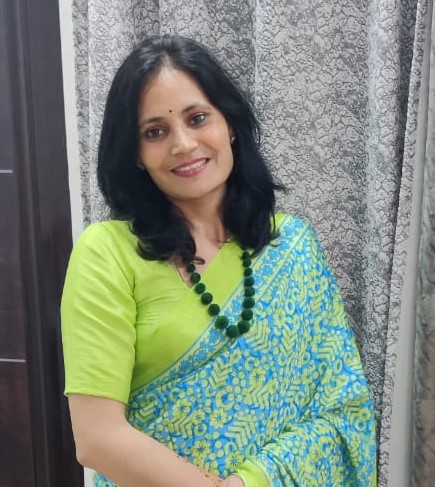
Dr. Suman Rani
Chairperson, Swami Dayanand Saraswati Chair